Master Core Knowledge of International Air Freight to Optimize Your Global Supply Chain
In international trade, air freight is the preferred choice for urgent and high-value goods due to its speed and reliability. However, its complex operational processes, geographical divisions, and aircraft types often pose challenges for businesses. This article systematically analyzes the core elements of international air freight to help you make smarter logistics decisions.
Core Services of Air Freight Agents
Air freight agents provide comprehensive services for shippers and consignees, including:
Consulting Services: Providing information on import/export regulations and requirements of destination countries
Cargo Collection Services: Arranging pickup from shippers and consolidating goods
Document Preparation: Completing air waybills, commercial invoices, packing lists, and other necessary documents
Compliance Checks: Ensuring import/export licenses comply with government regulations
Special Documentation: Handling dangerous goods declarations, animal certificates, and other special documents
Insurance Services: Arranging transportation insurance for cargo
Transportation Arrangements: Booking cargo space and managing airport delivery
Cargo Tracking: Monitoring shipment status throughout the transportation process
International Air Freight Geography and Route Divisions
IATA Three-Region Division:
IATA Region 1: North America, South America, and adjacent islands
IATA Region 2: Europe, Africa, and parts of West Asia
IATA Region 3: Most of Asia, Australia, and the Pacific Islands
Key Route Characteristics:
Departing from Mainland China: Tight space during peak seasons with higher prices; more competitive pricing during off-peak seasons
Departing from Hong Kong and South Korea: Capable of handling built-in battery cargo, more options for sensitive goods, relatively higher prices
Aircraft Types and Loading Limitations
Classification by Fuselage Width:
Narrow-Body Aircraft: Only the lower cargo hold can accommodate goods
Wide-Body Aircraft: Can load containerized and bulk cargo, with a fuselage width exceeding 4.72 meters
Classification by Usage:
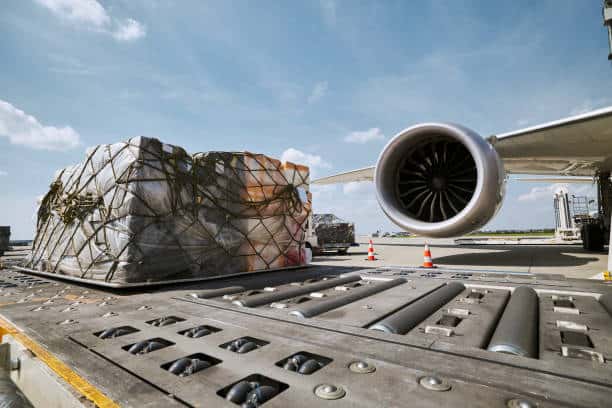
Full Freighter Aircraft: Both main and lower decks are used for cargo
Passenger Aircraft: Only the lower deck is used for cargo
Combi Aircraft: Front section for passengers, rear section and lower deck for cargo
Loading Limitation Considerations:
Weight restrictions
Volume limitations
Door dimensions
Floor load capacity (standard: 732 kg/m²)
International Air Freight Coding System
Country Codes: Two-letter codes (e.g., CN – China, US – United States, GB – United Kingdom)
Airport Codes: Three-letter codes (e.g., JFK – New York Kennedy, LAX – Los Angeles)
City Codes: Three-letter codes (e.g., BJS – Beijing, NYC – New York)
Airline Codes: Two-letter codes (e.g., CA – Air China, MU – China Eastern Airlines)
Why Choose Professional Air Freight Services?
Professional air freight agents can:
Ensure accurate and compliant documentation to avoid customs delays
Optimize route selection to balance cost and efficiency
Handle special cargo, such as dangerous goods and temperature-controlled items
Provide real-time tracking and emergency response
Need a Professional Air Freight Solution?
Let our experts provide you with customized air freight services to ensure your goods reach global destinations quickly and safely.
>> Get a Professional Air Freight Consultation & Quote Now!
We will provide the optimal air freight solution based on your cargo characteristics and delivery requirements, helping you optimize supply chain efficiency.