Is your supply chain facing tight deadlines or handling high-value, time-sensitive goods? While ocean freight is a cost-effective solution, air freight is the engine of global commerce when speed and reliability are non-negotiable. For US and EU importers, mastering the air cargo process ensures your critical shipments move with precision and efficiency. This guide walks you through the key stages.
The Key Stages of an International Air Shipment
The core workflow for air freight shares similarities with ocean shipping, but with distinct differences in speed, documentation, and handling. The primary shift is the mode of transport, moving from sea vessels to aircraft, and bookings are made with airlines or their consolidators instead of shipping lines.
1. Shipment Planning & Booking
You provide your freight forwarder with key details: dimensions, weight, nature of goods, and required timeline.
Your forwarder advises on the best flight options, provides a quote including all applicable air freight rates and surcharges, and secures a booking with an airline.
2. Documentation & Pre-Flight Preparation
You submit a Commercial Invoice and Packing List. These are critical for customs and determining the chargeable weight (based on actual or volumetric weight, whichever is greater).
For dangerous goods, a Shipper’s Declaration for Dangerous Goods is mandatory.
Your forwarder prepares the Air Waybill (AWB)—the contract of carriage and tracking document for air cargo.
3. Cargo Collection & Security Screening
A trucking service collects the cargo from your supplier and transports it to the airport terminal.
All cargo must undergo rigorous security screening as per TSA (for US) and international regulations before being accepted by the airline.
4. Export Customs Clearance
While the cargo is in transit to the airport, export customs declarations are filed and cleared at the departure airport.
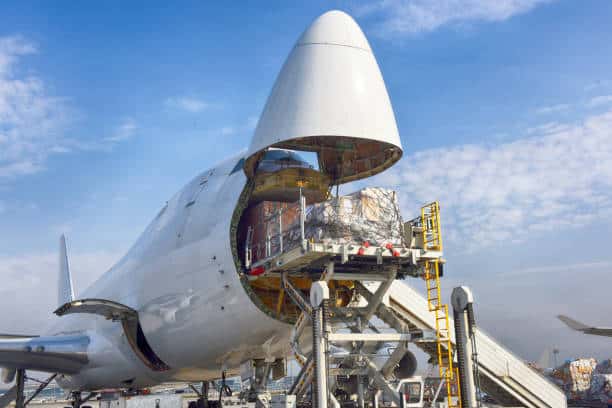
5. Airline Handling & Loading
Once cleared, the airline takes custody of the cargo, builds the unit load device (ULD), and loads it onto the scheduled aircraft.
6. In-Transit & Air Waybill Finalization
The AWB number is used for real-time flight tracking. The forwarder finalizes the AWB with the airline based on the confirmed booking and weight details.
7. Arrival & Import Customs Clearance
Upon arrival at the destination airport, the cargo is offloaded.
Your designated customs broker uses the AWB and other documents to clear the goods through import customs. This step must be completed before the cargo can be released.
8. Final Delivery to Consignee
After clearance, the cargo is delivered from the airport terminal to your specified warehouse or address.
Ready to Accelerate Your Supply Chain?
Don’t let complex logistics slow down your business. Partner with a freight forwarder that specializes in streamlined, reliable air cargo solutions.
>> Get a Competitive Air Freight Quote and Transit Time Today!